Jung 仲
Rear 1Closed
Front 2Closed
Front 3Closed
Front 4Closed
Front 5Open
Learn five basic fingerings and repeat a short melody.
Real instrument recordings · Free · No accountRecognise five fingering charts; this does not assess physical playing.
DANSO Jung · Im · Mu · Hwang · Tae
Tap to play · Keyboard A S D F G · Esc to stop
FIVE FINGERINGS
Filled circles mean closed; empty circles mean open. The rear thumb hole comes first, followed by four front holes from top to bottom.
Hole 5 (the lowest front hole) stays open in this convention. Read rear hole 1, then front holes 2–5. Upper registers may use different fingerings and breath for the same pitch name; designs and traditions vary.
Virtual pitches here: Jung A-flat 4, Im B-flat 4, Mu D-flat 5, Hwang E-flat 5 and Tae F5. These are equal-tempered approximations; 潢 and 汰 mark the higher-register pitch names. They do not assess physical tuning or breath.
A round ends after all ten answers. Scores reflect chart recognition, not physical playing ability.
Check sound to prepare audio. If you cannot hear it, check device volume and mute settings or practise without sound.
Ready? Test what you learned.
If selected, saves round starts, completions, dates and best score locally, with no transmission. Shows the last 28 days, up to 200 rounds. Turning it off clears this practice history and the previous best score. Note recordings are separate.
A SMALL MELODY
Write Jung, Im, Mu, Hwang and Tae separated by spaces. 0 or 쉼 skips one onset. BPM sets the spacing between starts, not sample duration; sound tails may overlap. These virtual five-note exercises are not full Jeonggan notation.
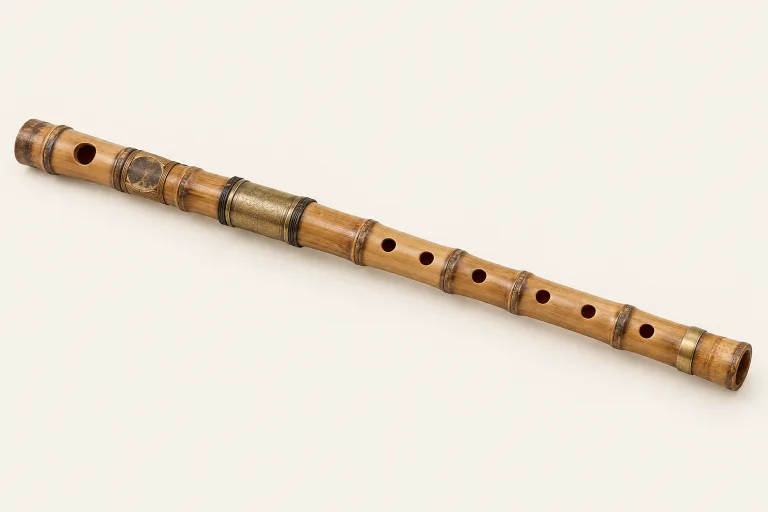
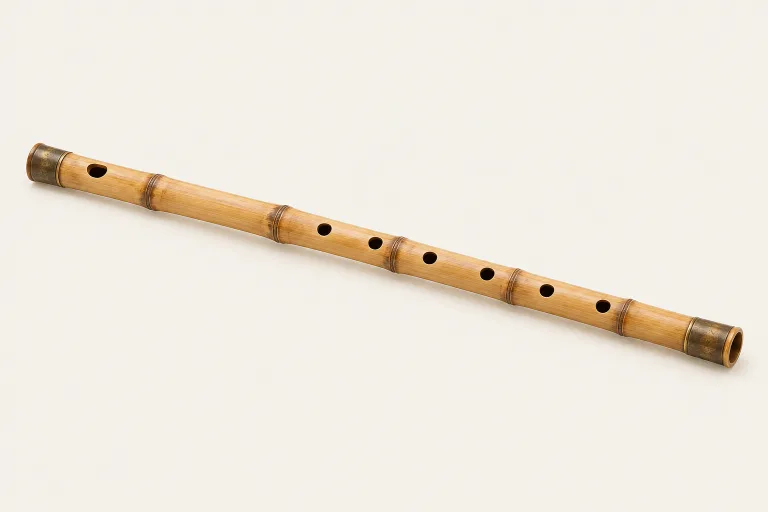
Danso is held vertically and sounded by blowing across its mouth opening. It has one rear and four front finger holes. Breath changes can produce different registers with the same fingering.
Tap Jung, Im, Mu, Hwang and Tae once each; compare which holes open in the chart. At 60 BPM, enter Jung Im Mu 0 Mu Im Jung and identify the note after the rest. Read hole numbers and open/closed labels together in the quiz.
The chart retains the existing five-note educational convention. It does not practise or assess embouchure, breath, half-holing or upper registers. Virtual Hwang is approximated near E-flat 5, not a tuning standard for a physical instrument.
These are UsefulSet listening and input tasks, not transcriptions of traditional pieces.
Uses individual notes extracted from National Gugak Center recordings. Pitches are adjusted to the virtual buttons and may differ from authentic tuning. Recordings: National Gugak Center · KOGL Type 1. Edited: note extraction, silence trimming, level adjustment, fades and MP3 conversion.
Danso pitches use an equal-tempered approximation with Hwang near E-flat.
No microphone is used. Recording stores pressed notes and timing for up to two minutes and 1,000 notes in this browser. Clearing browser data removes them. Playback and recording stop when the tab is hidden. New Danso best scores are saved only when optional practice history is enabled and remain on this device.
National Gugak Center single-note source IDs and filenames: 2339 · Danso_2.wav
MP3 files used for this instrument: 5; edited by extracting notes, trimming silence, adjusting levels, adding fades and converting to MP3.
Largest difference between a virtual button and its analysed source pitch: about 0.05 semitones. Playback-rate changes alter both pitch and duration. This analysis is not professional tuning verification.
Recording stores note names and press times, not microphone audio, volume changes or an audio file. Replay uses the saved timing at the current volume. Starting a new recording replaces the previous one.
Musicfield contributed educational fingering convention ↗ · National Gugak Center pitch names ↗