Buk북
Explore drum and rim-like synthesized strokes.
Synthesized practice tones · Free · No accountBUK Buk · Rim
Tap to play · Keyboard A S D F G · Esc to stop
Build a short rhythm
Record a few strokes and replay them. For a traditional rhythm accompaniment, open the Janggu trainer.
Practise Jangdan →Buk sound and practice
How is the sound made?
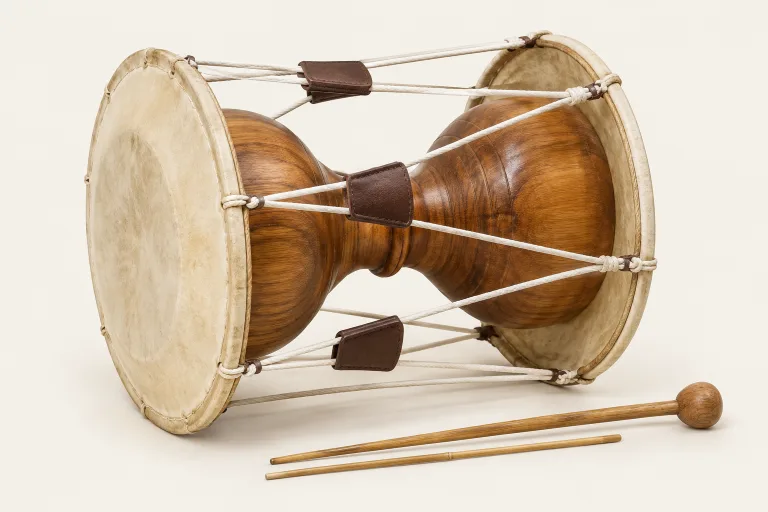
Buk refers to skin-headed percussion instruments. Drums used in Pansori, Nongak and rituals vary in construction and technique, so one tone cannot represent them all.
A task to try here
Alternate the Buk and Rim buttons to compare a low synthesized hit with a short synthesized hit. Record Buk–Buk–Rim with a pause and replay your spacing. This is a free-rhythm task, not a transcription of a traditional pattern.
How the tool differs from the instrument
Both sounds are synthesized, not physical drum recordings. They are not claimed to match a particular Soribuk or Samulbuk stroke. Consult the reference and a teacher separately for physical technique.
These are UsefulSet listening and input tasks, not transcriptions of traditional pieces.
Try this
- Start at a low volume and explore one sound at a time.
- Play and record a short phrase, then listen again.
- Repeat the difficult parts slowly and return to them in your next session.
Sound and storage
Buk uses synthesized practice tones. Recorded samples are not yet available.
No microphone is used. Recording stores pressed notes and timing for up to two minutes and 1,000 notes in this browser. Clearing browser data removes them. Playback and recording stop when the tab is hidden. New Danso best scores are saved only when optional practice history is enabled and remain on this device.
Recording stores note names and press times, not microphone audio, volume changes or an audio file. Replay uses the saved timing at the current volume. Starting a new recording replaces the previous one.